
A renovation can look deceptively straightforward at first: open the kitchen, update the primary bath, furnish the living room, perhaps add an office or ADU. Then the decisions begin to compound. Where should the new openings align? Does the lighting plan support how the rooms will actually be used? Which materials will hold up over time without making the house feel overly finished or precious?
Knowing when to hire an interior designer is less about reaching a certain budget than recognizing when individual choices need to become one coherent environment. For a meaningful renovation, custom home, or high-value furnishing project, the right moment is often earlier than homeowners expect.
Hire an Interior Designer Before Decisions Become Fixed
The most valuable design work happens before a plan has hardened. Once walls are framed, plumbing locations are set, and electrical rough-in is complete, many of the decisions that shape daily experience become expensive to revisit. An interior designer can work alongside the architect and contractor to establish room proportions, circulation, storage, lighting locations, ceiling details, material transitions, and furniture clearances while there is still flexibility.
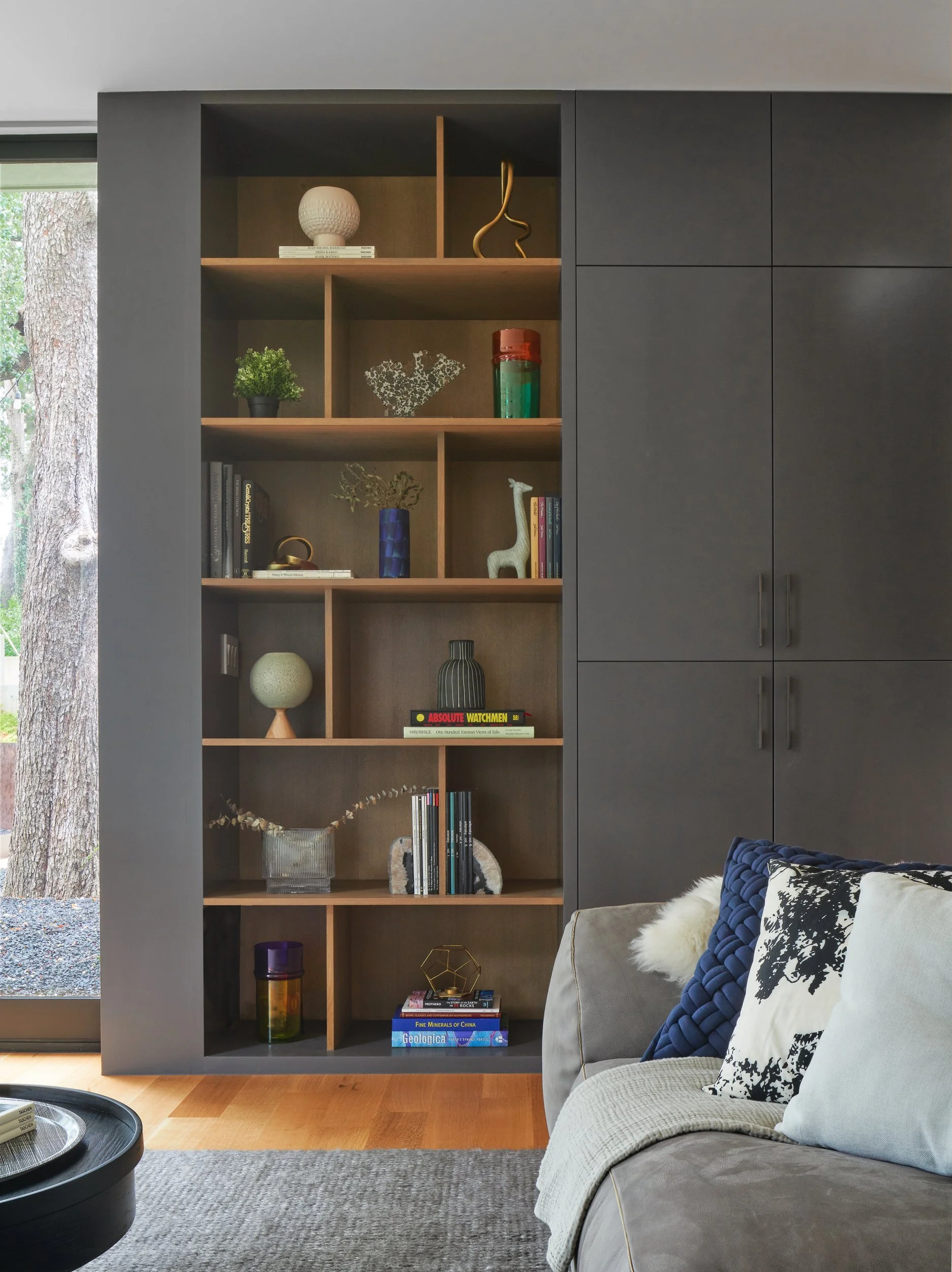
This does not mean every project requires a designer before an architect. For an addition, a substantial remodel, or a ground-up residence, architecture should lead the building's structure, site relationship, and envelope. But interior design should enter the conversation during schematic planning, not after the construction set is complete. The two disciplines inform each other. A kitchen layout affects window placement. A preferred stone slab may influence island dimensions. A desire for quiet, integrated storage can change the architecture of an entire wall.
For a condominium renovation in San Francisco, where square footage is finite and building constraints can be significant, that coordination is particularly useful. A room may need to serve as a guest space, study, and retreat without looking overworked. Planning the interior early protects both function and visual calm.
The Project Signals That Professional Direction Will Help
A designer is not necessary for every new sofa or paint refresh. If the scope is contained, the floor plan works well, and you enjoy researching and making decisions, a focused update can be managed independently. The case for hiring a designer strengthens when the project involves several interdependent layers.
Consider bringing in professional direction when you are changing the layout of more than one room, selecting permanent finishes across a home, coordinating custom millwork, or furnishing a residence from a limited starting point. The same is true when a project includes a new kitchen or bath, a significant addition, an ADU, or a commercial setting that needs to express a distinct brand and work efficiently.
Another signal is decision fatigue. A well-considered home may require hundreds of small decisions, from the reveal at a cabinet panel to the temperature of a white paint, the profile of a faucet, and the exact height of a pendant. None of these choices exists in isolation. The work is not simply choosing attractive objects. It is setting a framework so that every decision reinforces the larger composition.
Homeowners also often hire a designer when their references point in several directions. You may be drawn to Scandinavian restraint, the warmth of an atomic ranch, and the polish of a contemporary city residence. Those preferences can coexist, but not by collecting a little of each. A designer identifies the common thread, determines what belongs to the architecture, and edits out what would compete.

Timing Matters More Than Many Clients Expect
For a full-home remodel, begin the conversation before selecting a contractor and before finalizing permit drawings whenever possible. This allows the project team to develop a shared understanding of scope, budget, and design intent. It also reduces the common gap between a technically sound building plan and a resolved interior.
For new construction, interior design should begin during early architectural design. This is the point when room dimensions, window locations, kitchen configuration, fireplace placement, and indoor-outdoor relationships can respond to how you live. Waiting until construction begins may still produce a beautiful result, but it usually narrows the range of possible solutions.
A furnishing project has a different cadence. Hire a designer before ordering major pieces, especially if you are furnishing multiple rooms or moving into a new home. Sofas, rugs, dining tables, lighting, window treatments, and custom pieces all need to work together in scale, palette, and delivery sequence. Purchasing a few large items too early can make the rest of the project an exercise in accommodation.
There are exceptions. If construction is already underway, it is still worth seeking help rather than treating the remaining decisions as decoration. A designer can clarify the lighting and finish selections, review millwork drawings, solve furniture layouts, and establish priorities for the budget. The earlier engagement offers more structural influence; a later engagement can still bring order and refinement.
What an Interior Designer Actually Changes
The strongest interiors feel inevitable because their complexity has been managed quietly. The door hardware relates to the cabinetry. The flooring meets the plaster wall or stone threshold with intention. The lighting shifts appropriately from task-oriented kitchen work to a softer evening living room. Storage is available where it is needed, but visual noise is minimized.
That level of resolution requires both creative and technical judgment. An interior designer interprets how a household uses space, then translates that understanding into plans, material palettes, specifications, details, and selections that a contractor can execute. The process also involves reviewing dimensions, anticipating lead times, coordinating vendors, and resolving issues as they arise in the field.
The return is not only aesthetic. Thoughtful planning can prevent costly changes, avoid undersized or oversized purchases, and direct spending toward elements that will materially affect the experience of the home. It can also reveal where not to spend. In a minimal interior, for example, fewer materials may be used, but the materials that remain need to be chosen and detailed with care. Restraint is not the same as reduction for its own sake.
Choose a Designer for the Way You Want to Live
Portfolio fit matters. A designer's work should demonstrate more than a collection of appealing images. Look for evidence of consistent judgment across different property types, from urban residences to hillside homes, renovations, and workspaces. Notice how rooms are organized, how materials meet, and whether the projects feel responsive to their architecture and setting.
It is equally useful to discuss process. Ask when the designer joins the project team, how they communicate with architects and builders, what is included in the scope, and how purchasing, approvals, and site visits are handled. A clear process is particularly valuable for clients with demanding professional schedules. It creates defined moments for decisions while keeping the project moving between them.
The relationship should also leave room for candor. A good designer will understand your references and priorities, but may challenge an instinct that does not serve the overall project. That is part of the value. The goal is not to impose a signature at the expense of the client, nor to approve every individual preference. It is to develop a home with a distinct point of view that feels personal, practical, and enduring.
Consider Scope Before Setting a Fee Expectation
Design fees vary with the type and complexity of the work. A single-room furnishing plan is fundamentally different from a full renovation involving construction documentation, custom cabinetry, finish specifications, procurement, and construction administration. Comparing proposals only by an initial fee can obscure these differences.
A more useful question is what level of involvement the project requires. A limited consultation may be appropriate when you need a second opinion on layout or finishes. A comprehensive engagement is better suited to a residence where the design must be coordinated from architectural planning through installation. For a project with meaningful construction, incomplete design services can create ambiguity that reappears later as change orders, delays, or decisions made under pressure.
The budget should be discussed directly from the outset. A designer can help allocate it across construction, finishes, furnishings, lighting, and contingency, then identify which investments will have lasting value. This is not about making every room equally expensive. It is about spending with a clear sense of proportion.
A home does not need to be large to merit careful design, and a large project does not automatically need every service available. The useful threshold is complexity: the moment your choices begin to affect each other, professional guidance can turn a series of decisions into a place that feels composed from the first arrival to the last detail.
Planning a renovation or full home design in the San Francisco Bay Area or Austin? Our Bay Area interior design team works across San Francisco, Marin, the Peninsula and the East Bay, and our Austin studio serves Central Texas. Book a discovery call to talk through your project.