
A home can feel calm without looking empty, and collected without becoming crowded. That distinction is where wabi sabi, japandi, Scandinavian, and midcentury modern are often confused. They share a preference for restraint, honest materials, and rooms designed for daily use. Yet each arrives there through a different visual language.
For a renovation, custom residence, or urban condominium, the question is not which label is most current. It is which principles suit the architecture, the light, and the way the household actually lives. A low-slung Austin ranch may welcome the graphic clarity of midcentury modern. A San Francisco apartment with filtered northern light may benefit from the pale warmth and edited material palette associated with Japandi. The most convincing interiors do not apply a style wholesale. They establish a disciplined point of view.
Wabi Sabi, Japandi, Scandinavian, and Midcentury Modern
These four approaches overlap in their rejection of excess, but their ideas of beauty differ. Understanding those differences makes it easier to make lasting decisions about millwork, furniture, finishes, and art.
Wabi sabi: beauty with evidence of life
Wabi sabi is rooted in Japanese ideas of impermanence, irregularity, and patina. It favors materials that reveal their origin and change with use: limewashed plaster, hand-thrown ceramics, weathered oak, unfilled travertine, linen, and paper. A wabi sabi room does not seek a perfect surface. It allows variation in tone, texture, and silhouette to remain visible.
That does not mean rustic, unfinished, or casually assembled. In a well-resolved interior, wabi sabi requires considerable control. The palette is quiet because texture is doing the visual work. A plaster wall may carry the room more effectively than a patterned wallpaper; an irregular ceramic vessel can feel more considered than a shelf of decorative objects.
The trade-off is practical. Highly tactile materials are not always low maintenance, especially in homes with young children, pets, or heavy entertaining. The answer is rarely to avoid them. It is to place them strategically: a honed stone in a powder room, a hand-finished tile at a fireplace, a vintage wood table that can accept another mark over time.
Japandi: warmth organized by restraint
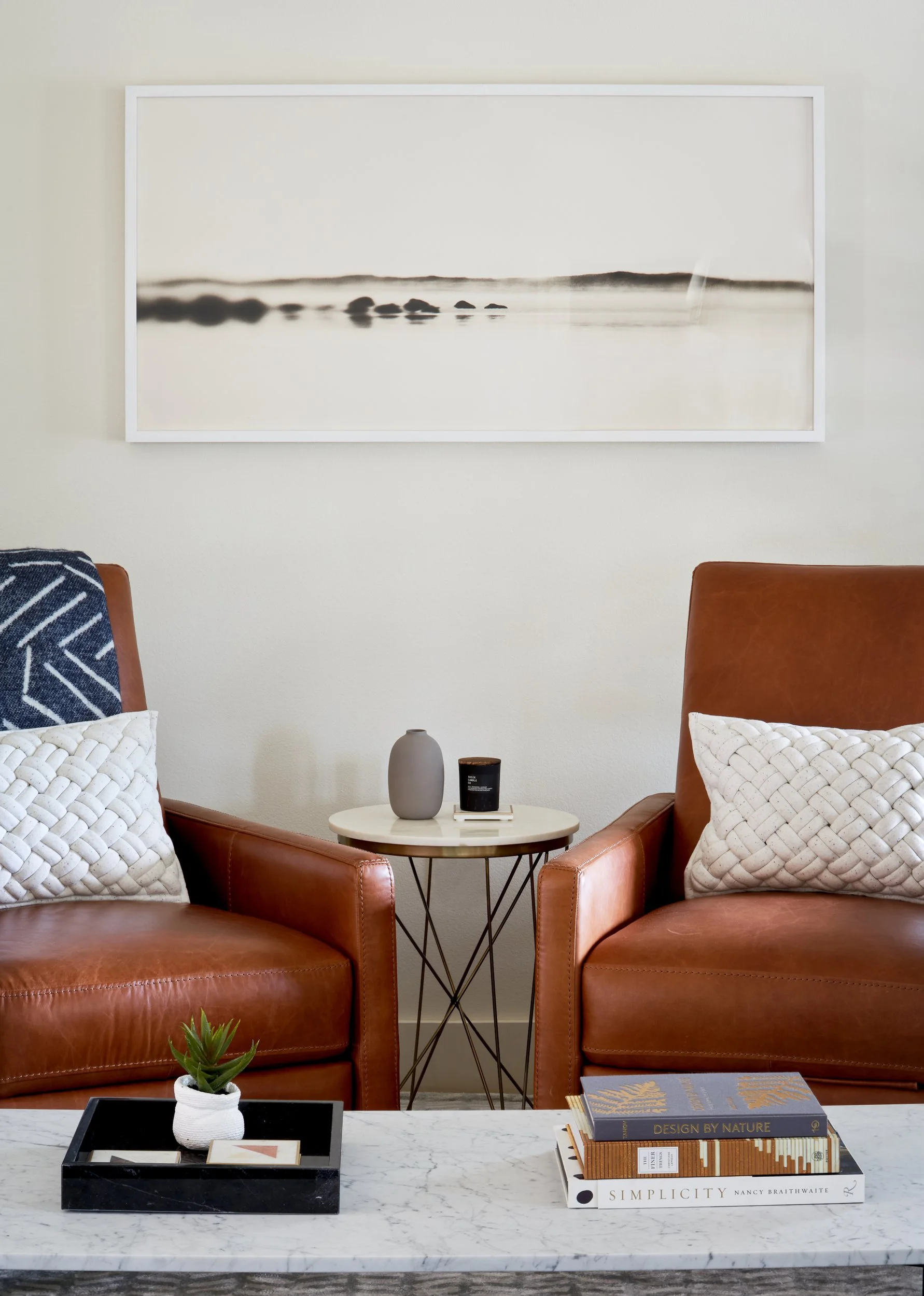
Japandi is best understood as a contemporary meeting point between Japanese and Scandinavian design. It pairs Japanese visual quiet with Scandinavian comfort and utility. The result is often warm minimalism: pale woods, low profiles, natural textiles, soft black accents, simple forms, and carefully managed negative space.
Compared with wabi sabi, Japandi is generally more ordered. Furniture tends toward clean geometry, storage is integrated, and the color story is deliberately limited. The room may include handmade elements, but it is less focused on visible imperfection than on balance. A Japandi kitchen, for instance, might combine flat-panel oak cabinetry, discreet pulls, a honed stone counter, and a single sculptural pendant. Every component is calm, but none is accidental.
Japandi works especially well when a home needs visual ease without feeling sterile. It can soften a contemporary addition, bring coherence to an open-plan living area, or give an urban residence a more grounded atmosphere. Its risk is over-smoothing. When every surface is pale oak, cream upholstery, and matte black hardware, the room can become generic. Architectural details, artwork, or one substantial material gesture should carry a sense of specificity.
Scandinavian: light, utility, and democratic design
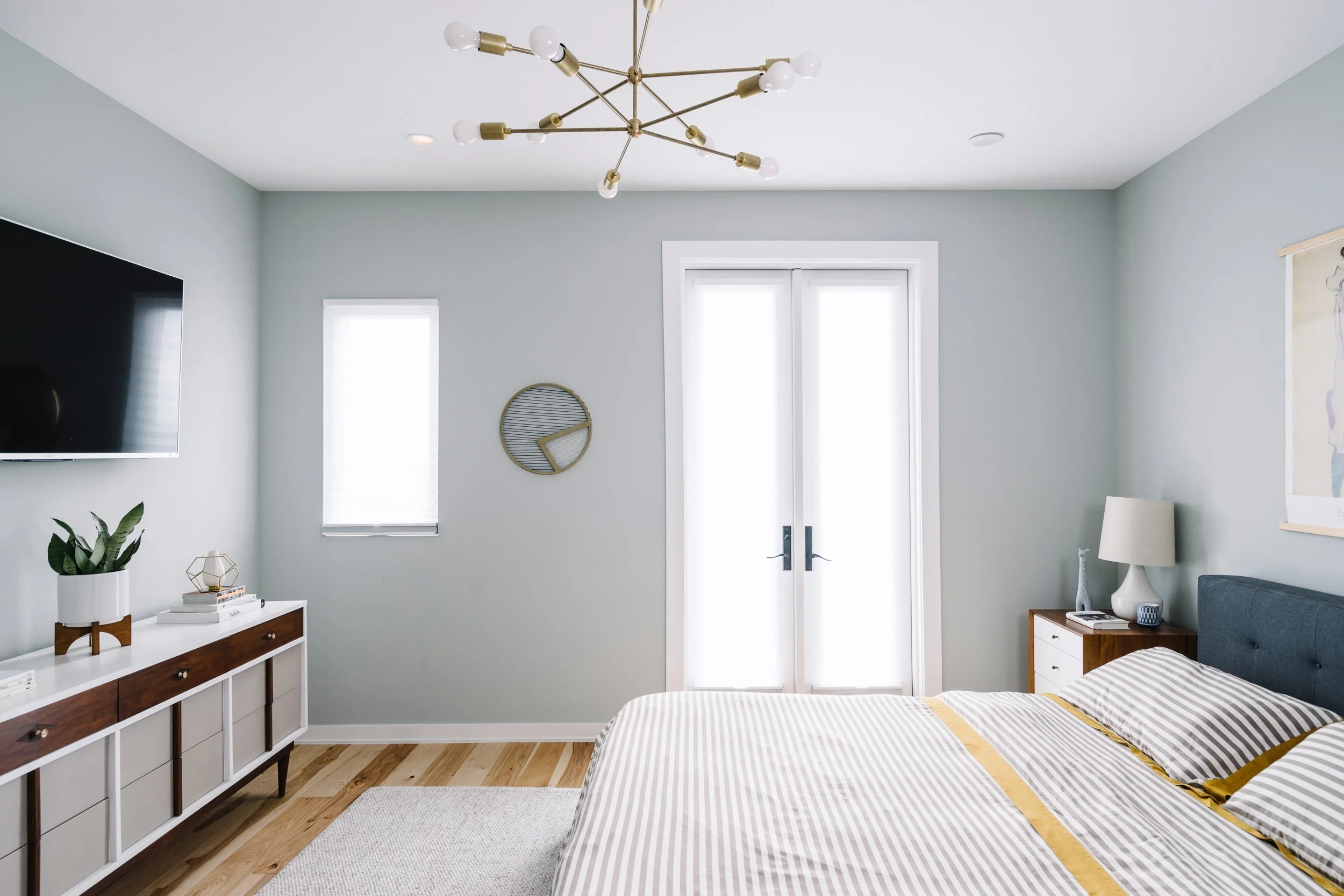
Scandinavian design is broader than the pale, minimalist version often seen online. Its enduring principles are practical: make the most of limited daylight, prioritize comfort, use durable natural materials, and choose forms that are simple without being severe. It can be light and airy, but it can also include saturated color, richly grained wood, woven textiles, and expressive lighting.
The strongest Scandinavian interiors feel livable rather than precious. Seating is inviting. Storage is thoughtful. Windows remain visually open. Wood brings warmth to white or neutral surfaces, while lighting creates intimacy after sunset. In this sense, Scandinavian design is often the most flexible of the four categories for a busy family home.
It also has a direct relationship to architecture. A room with good proportions, daylight, and a clear circulation path does not need many gestures. In older homes, this may mean preserving original windows or exposed structure while simplifying the surrounding finishes. In newer construction, it may mean introducing texture and warmth so the architecture does not read as merely crisp.
Midcentury modern: structure, contrast, and optimism
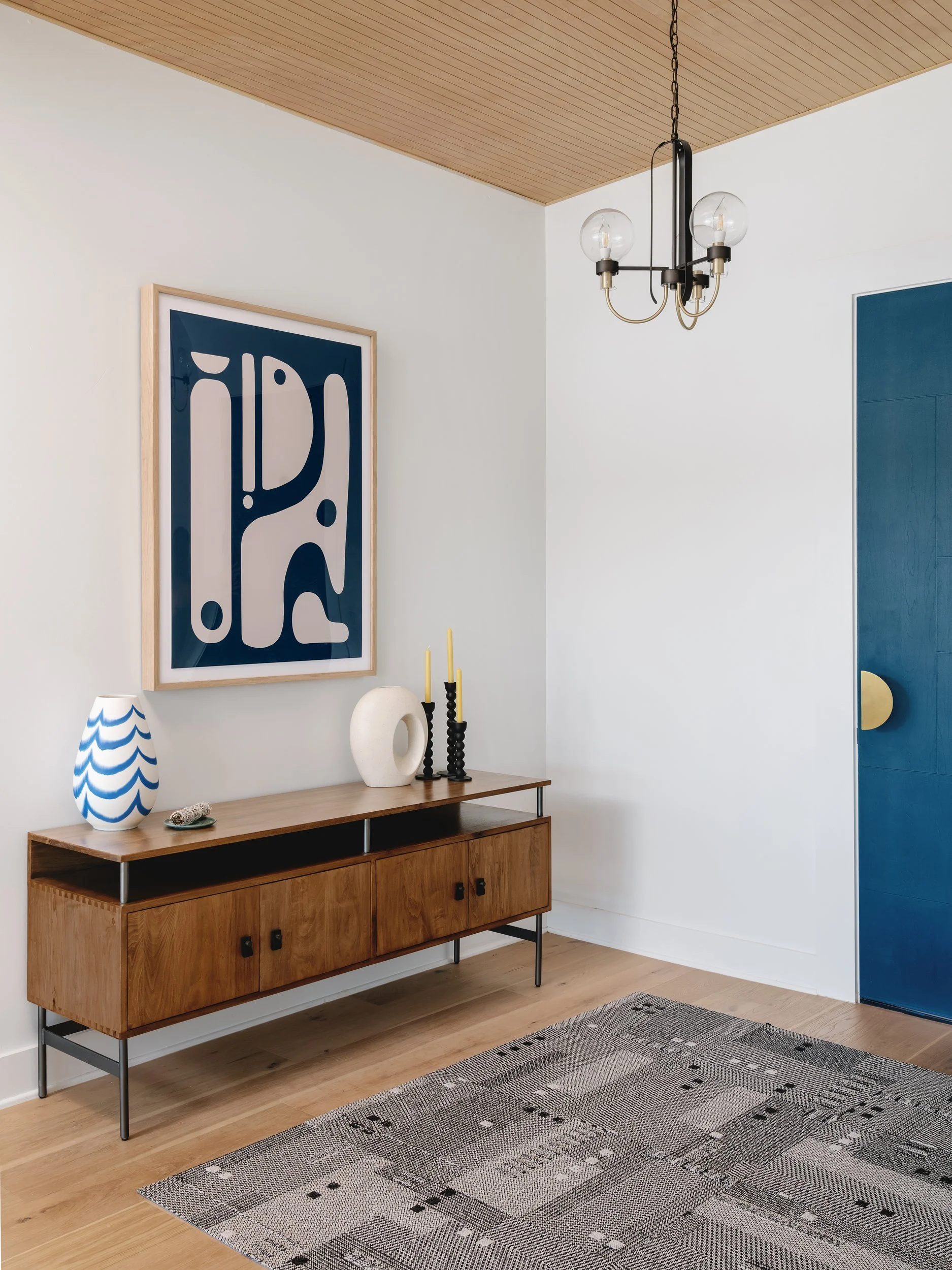
Midcentury modern is defined less by a neutral palette than by a particular confidence in form. Emerging in the middle of the twentieth century, it embraces clean lines, organic curves, new manufacturing methods, and an active relationship between interior and landscape. Think walnut casework, slender legs, molded forms, graphic lighting, expansive glazing, and rooms arranged for conversation.
Unlike the more hushed quality of wabi sabi or Japandi, midcentury modern can support stronger contrast. Teak, walnut, olive green, tobacco leather, ochre, brick, and blackened metal all have a place. The goal is not ornament, but visual energy. In an atomic ranch or postwar home, honoring the existing roofline, brickwork, window rhythm, and built-ins usually matters more than adding period-themed accessories.
This is where projects can go wrong. A collection of iconic chairs does not create a midcentury modern interior if the scale, architecture, and circulation are unresolved. Conversely, a modest original fireplace, warm wood paneling, and carefully selected contemporary furnishings may feel entirely faithful to the house. Preservation and modernization are not opposites when the underlying structure is respected.
Choosing the right direction for the house
Rather than asking which aesthetic is best, begin with what the property already offers. A home with rough plaster, exposed beams, and a strong relationship to a garden may be a natural fit for wabi sabi principles. A compact, highly functional city residence may benefit from Japandi's integrated storage and quiet palette. A bright family house can draw from Scandinavian design's comfort and utility, while a postwar residence may call for a midcentury modern approach that restores its architectural clarity.
Climate and regional light matter as much as taste. In Texas, a sun-filled room can handle deeper woods, mineral surfaces, and shaded textiles that temper the intensity of the day. In the Bay Area, where fog and cool light can flatten an interior, material contrast and warmer undertones may be necessary. Minimal spaces are particularly sensitive to these conditions because there are fewer elements competing for attention.
A useful framework is to choose one style as the architectural foundation and borrow selectively from the others. A midcentury house might retain its walnut and graphic structure while introducing the handmade ceramic and plaster textures of wabi sabi. A Japandi interior can gain depth from the bolder lighting and upholstered forms associated with Scandinavian design. The combination should feel like a response to the house, not a catalog of references.
Material decisions that keep the look from becoming literal
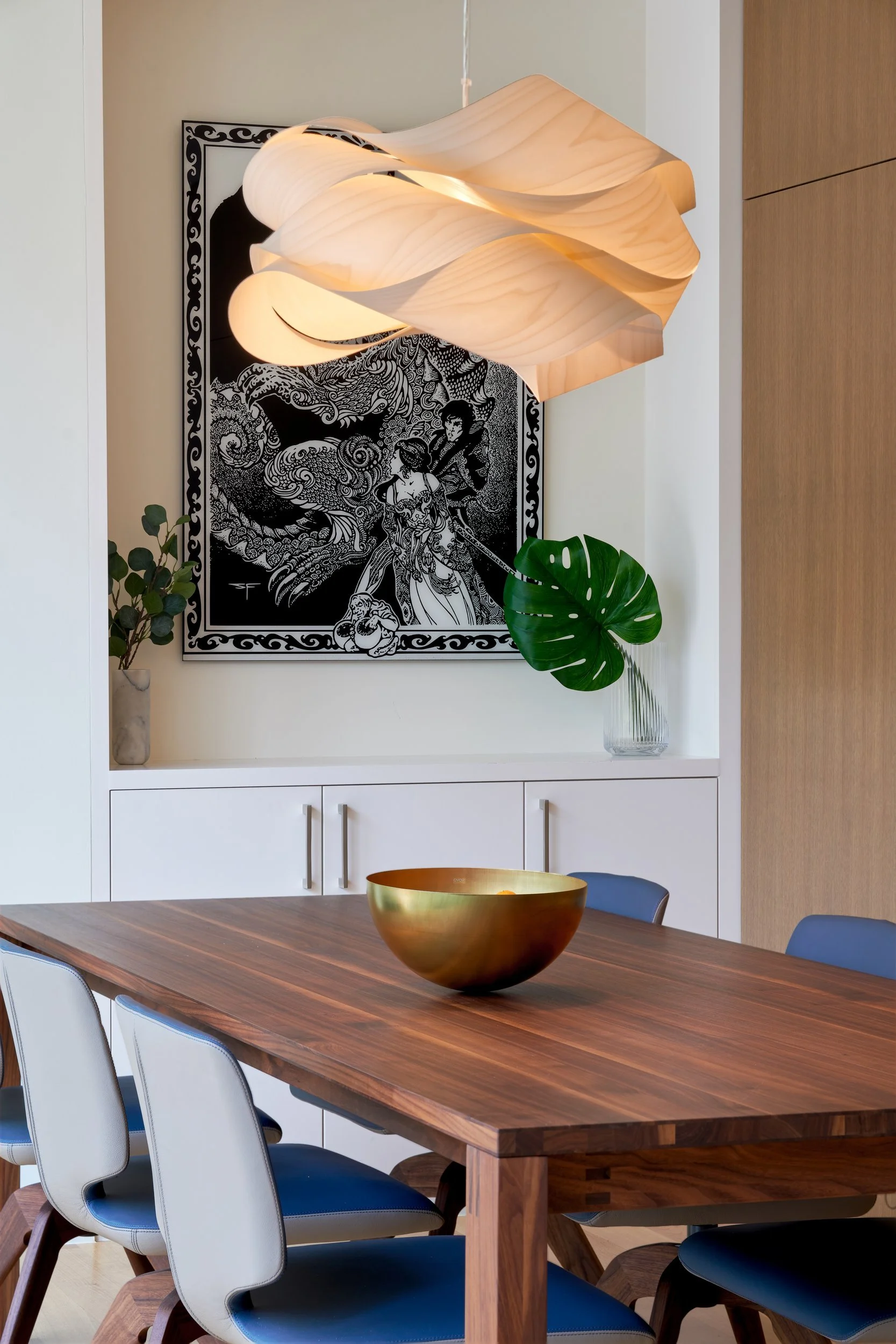
The most enduring work happens at the level of material and proportion. Start with a restrained base: a wood species, a stone, a wall finish, and a metal finish that relate to one another. Then use furniture to establish the period or cultural reference more precisely. This sequence keeps a home flexible as tastes evolve.
For example, rift-cut white oak can read Japandi or Scandinavian depending on the surrounding palette and detailing. Walnut can feel distinctly midcentury modern when paired with low, horizontal millwork, but it can also bring necessary depth to a more contemporary room. Travertine may feel sculptural and 1970s in one setting, quietly imperfect and wabi sabi in another. The material is not the style by itself. Its finish, scale, placement, and companions determine the effect.
Avoid treating minimalism as an absence of decisions. Fewer materials demand closer attention to joints, transitions, shadow lines, hardware, and the exact warmth of a white paint. When those elements are resolved, a quiet room gains presence. When they are not, it can feel unfinished.
The most compelling interiors leave room for life to register. A chair is selected for how it holds the body, not only for its silhouette. A dining table gathers wear as it gathers people. Natural light changes the reading of plaster, wood, and stone through the day. Whether the starting point is wabi sabi, Japandi, Scandinavian, or midcentury modern, that lived dimension is what turns an aesthetic into a home.
Planning a renovation or full home design in the San Francisco Bay Area or Austin? Our Bay Area interior design team works across San Francisco, Marin, the Peninsula and the East Bay, and our Austin studio serves Central Texas. Book a discovery call to talk through your project.