
A plaster wall that holds the changing afternoon light. A white oak cabinet with visible grain. Hand-thrown ceramic bowls used every morning rather than kept for display. In a wabi sabi Bay Area interior, these choices create a home that feels composed without feeling precious.
The appeal is understandable in a region where architecture often moves between crisp modernism, hillside landscapes, and dense urban living. Wabi-sabi brings warmth to minimal spaces, but it is not a styling shortcut. Its quietness depends on careful proportion, edited material selections, and a willingness to let time become part of the design.
What Wabi-Sabi Means in Interior Design
Wabi-sabi is often reduced to an aesthetic of imperfection. That description is incomplete. Rooted in Japanese cultural traditions, it recognizes the value of impermanence, irregularity, and honest materials. In interiors, the result is less about adding rustic objects and more about creating an atmosphere of ease.
A wabi-sabi room may have a low, sculptural sofa, linen drapery, aged brass hardware, and a floor with natural variation. None of these elements needs to announce itself. Their effect comes from their relationship to one another: a restrained palette, soft shifts in texture, and forms that feel useful as well as considered.
For a contemporary residence, this approach can temper the hard edges of glass, steel, and polished stone. It can also keep a historic renovation from becoming overly nostalgic. The goal is not to make a new home appear artificially old. It is to choose finishes that gain character through use rather than lose appeal at the first sign of wear.
Wabi Sabi Bay Area Design Is Shaped by Place
The Bay Area offers a particularly fitting context for this sensibility. Northern California light is often cool and diffuse, while fog, mature landscapes, and weathered building materials create a naturally muted visual field. A home in Mill Valley calls for different material decisions than a Pacific Heights condominium, but both can benefit from a quieter response to color and texture.
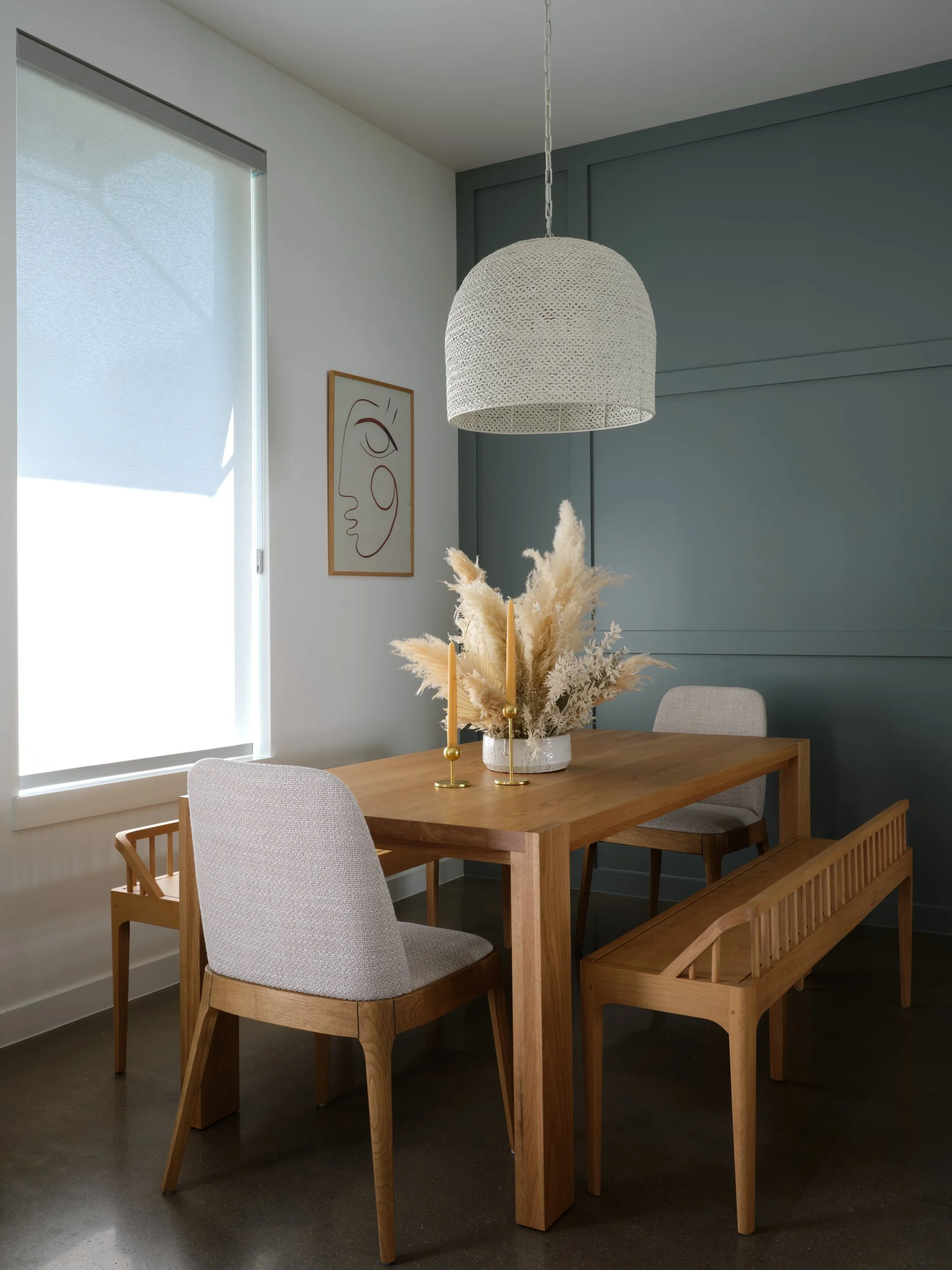
In a wooded Marin residence, that might mean warm oak, limewash, wool upholstery, and stone with a honed rather than glossy finish. These materials allow the setting to remain present. In San Francisco, where square footage and light can be more constrained, wabi-sabi may appear through fewer but more intentional gestures: integrated storage, a plaster-toned wall, a vintage wood table, or a single deeply scaled pendant that gives a dining area gravity.
The regional interpretation should still respect the architecture. A midcentury house may support clean-lined millwork and tactile textiles. A Victorian renovation may call for more contrast between historic detail and contemporary insertions. The common thread is not a prescribed look. It is material clarity and visual restraint.
Start With Materials That Improve Over Time
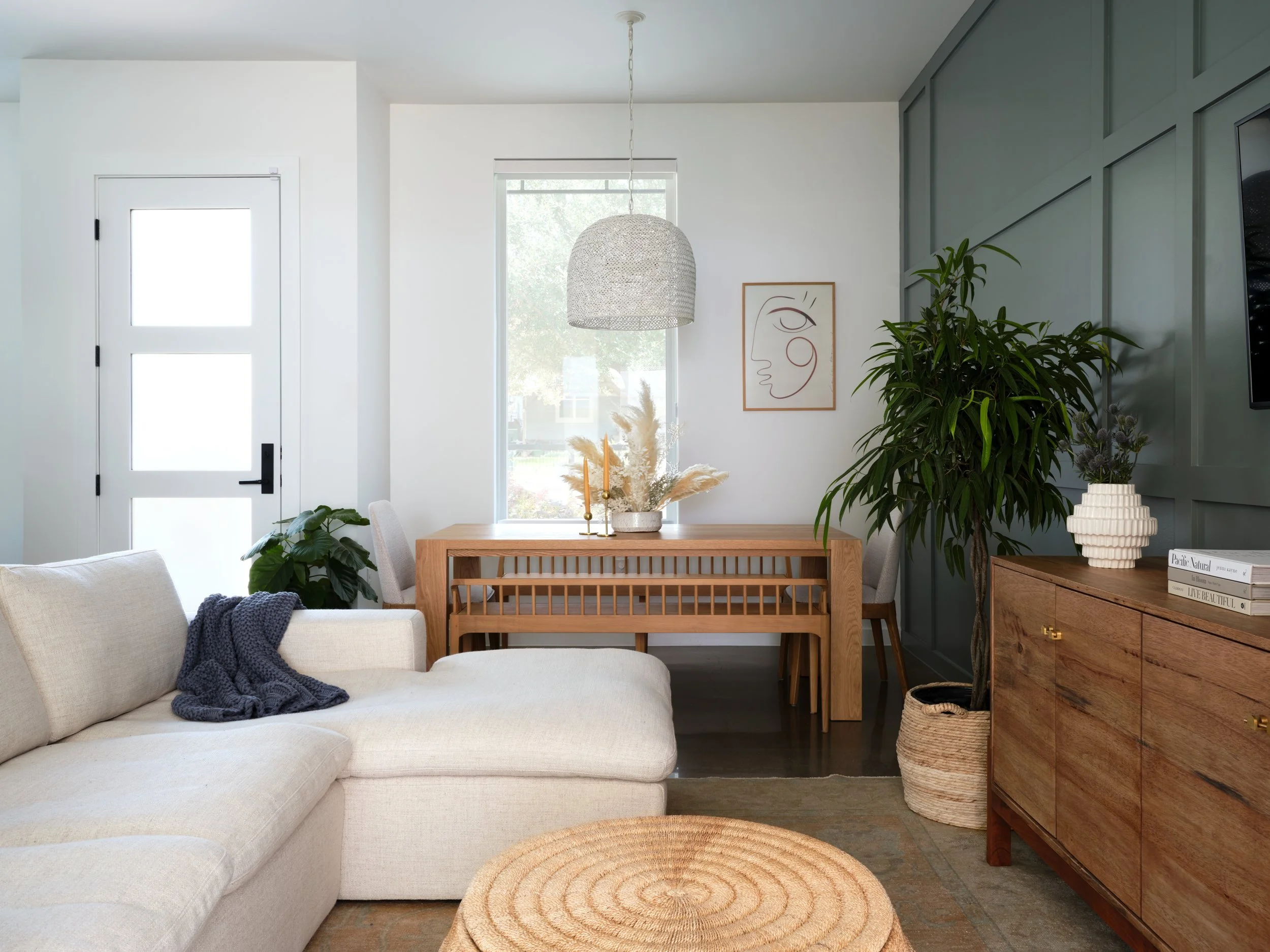
The strongest wabi-sabi interiors are built around durable, touchable surfaces. Natural wood, unlacquered brass, linen, wool, leather, ceramic tile, and plaster each respond differently to light and use. That variation is part of their value.
Material quality matters more than quantity. One substantial oak dining table can carry more presence than a room filled with decorative accessories. Likewise, a hand-finished plaster surface has depth that flat paint rarely achieves, but it requires a client comfortable with subtle inconsistency. If a perfectly uniform finish is the priority, another material may be a better fit.
This is where the trade-offs become practical. Limestone is beautiful underfoot but can be more vulnerable to staining than porcelain. Linen upholstery is relaxed and breathable, yet families with young children may prefer a higher-performance textile in the most heavily used rooms. Wabi-sabi is not an argument against durability. It asks for materials whose maintenance requirements align with real life.
Restraint Creates the Room’s Character
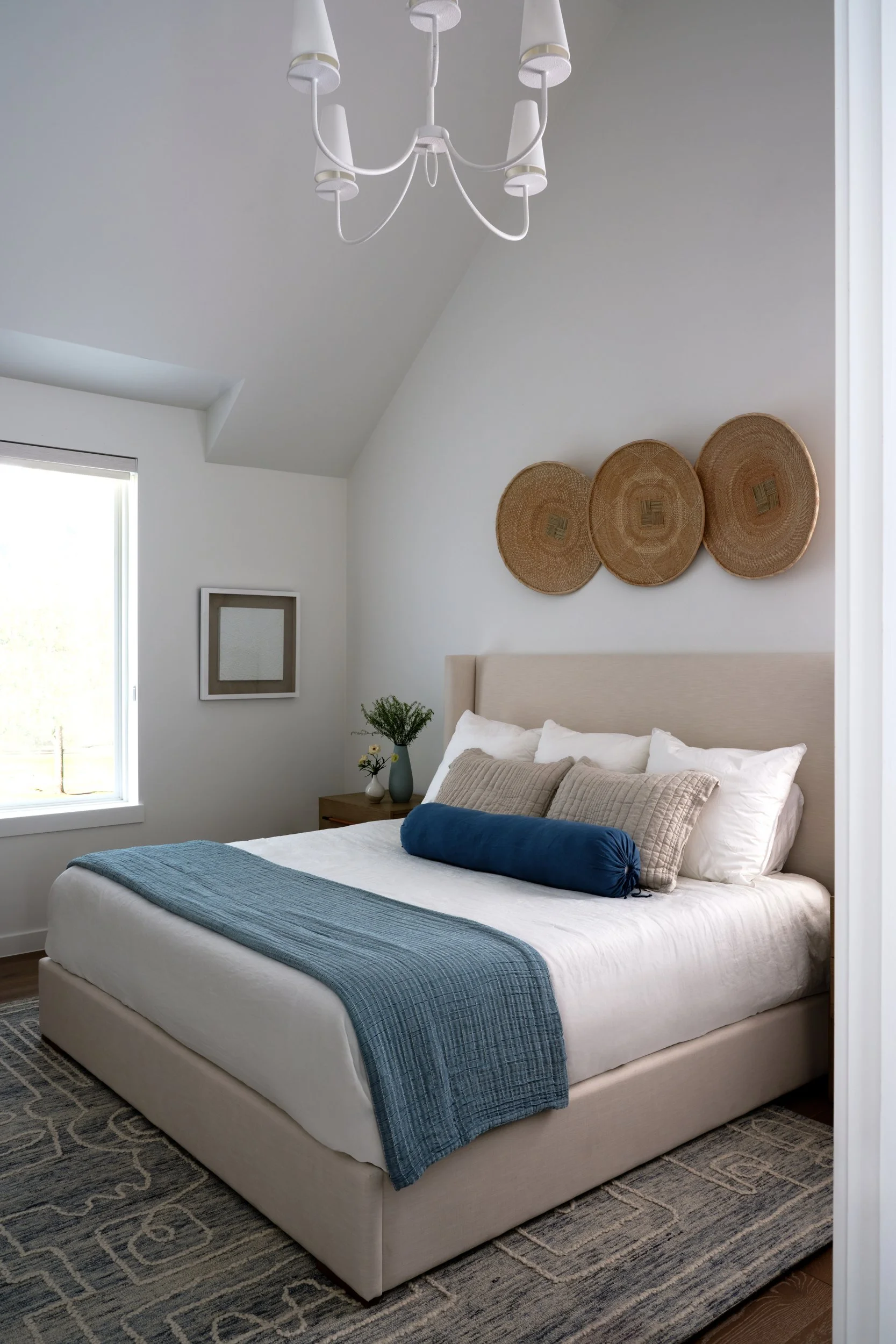
A common mistake is treating wabi-sabi as an accumulation of handmade objects, dried branches, and earth-toned décor. The more persuasive approach is architectural. Begin with circulation, scale, storage, and the relationship between natural and artificial light. Then allow a small number of expressive pieces to register.
Negative space is essential. A console left mostly clear, an open shelf with only a few objects, or a wall without art can give a room room to breathe. The same principle applies to color. Soft mineral whites, clay, tobacco, charcoal, and faded greens often work well, but the palette should not become monotonous. A dark timber threshold, oxidized metal detail, or saturated artwork can provide needed structure.
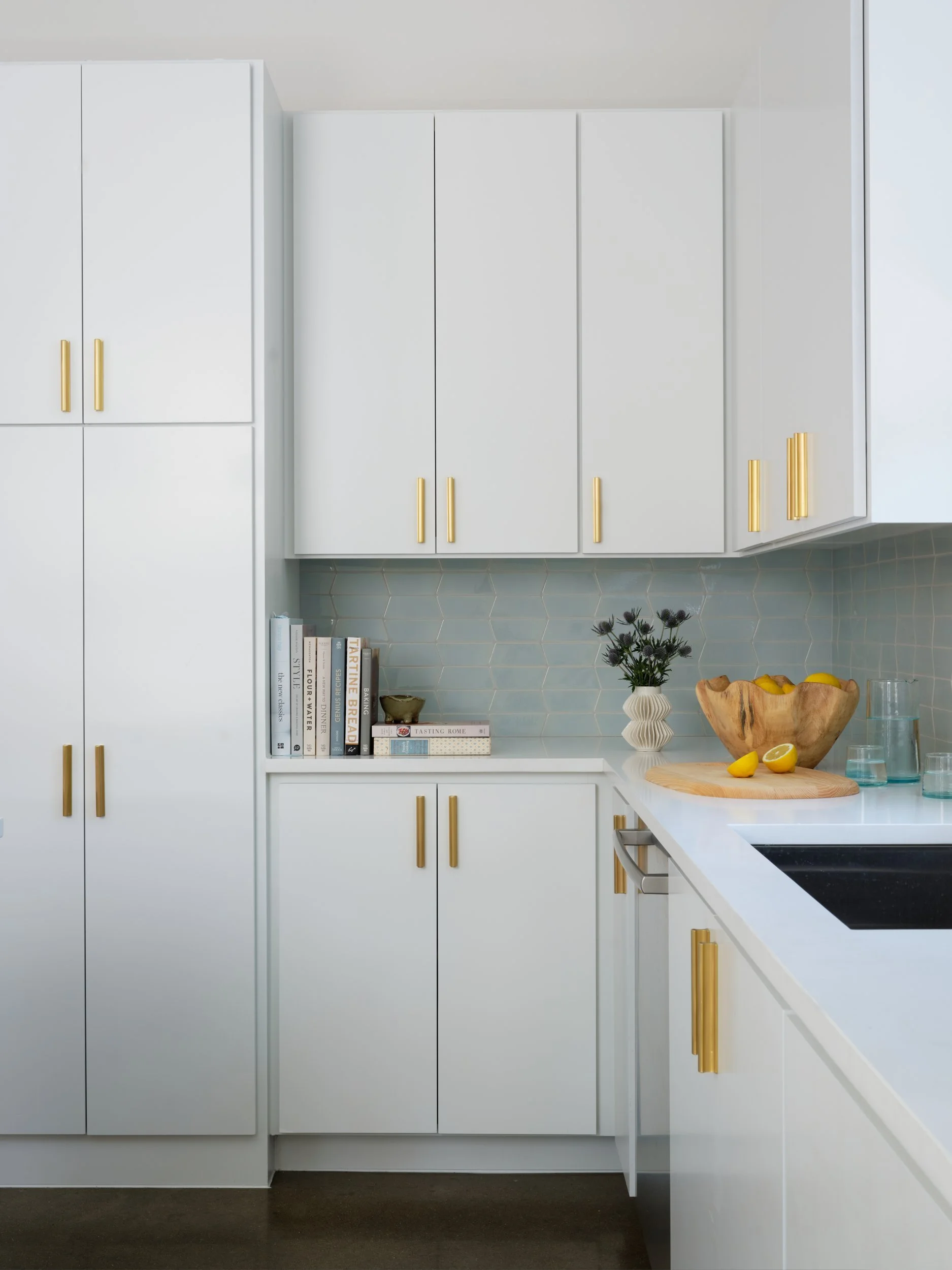
For clients undertaking a full renovation, this discipline is best established early. Cabinet profiles, reveal details, plumbing finishes, and lighting temperatures all contribute to the final atmosphere. Wabi-sabi feels effortless only when those decisions have been resolved with precision.
A Home That Can Be Lived In
The most enduring version of wabi-sabi is not staged for a photograph. It accommodates a dinner gathering, a child’s backpack, a rainy dog, and the ordinary rituals that make a house personal. A dining table can show use. A linen curtain can move in the breeze. A ceramic cup can have a small irregularity that makes it better to hold.
For a Bay Area home, the most compelling spaces are often the ones that pair this lived-in quality with a distinctly contemporary plan. Choose fewer materials, choose them well, and give them enough time and space to reveal their character.
Planning a renovation or full home design in the San Francisco Bay Area or Austin? Our Bay Area interior design team works across San Francisco, Marin, the Peninsula and the East Bay, and our Austin studio serves Central Texas. Book a discovery call to talk through your project.