
A thoughtful stone countertop comparison begins well before selecting a slab. The material will occupy one of the largest uninterrupted planes in a kitchen or bath, shaping how cabinetry reads, how light moves through the room, and how comfortably the space supports daily life. For a restrained, architectural interior, the right choice is rarely the most dramatic stone in the showroom. It is the one whose color, movement, finish, and performance feel resolved with the architecture around it.
Start With the Room, Not the Sample
Stone is often considered as a finish, but it behaves more like a piece of furniture or a work of art: it has presence. A heavily veined marble may be extraordinary in a compact city kitchen with quiet oak cabinetry and limited upper storage. The same slab can feel overly assertive in an open-plan home already defined by a sculptural stair, expansive glazing, or a strongly grained wood floor.
Look at the slab at its full scale and under conditions close to those in the finished space. Daylight, under-cabinet lighting, and adjacent paint or millwork can shift a stone's apparent undertone considerably. This is particularly relevant in bright Austin homes, where warm sunlight can intensify cream, gold, and rust notes, and in San Francisco interiors, where cooler coastal light may bring forward gray or blue veining.
The most useful starting questions are practical as well as visual. Is the surface for a kitchen used several times a day, a bar, a primary bath, or a secondary powder room? Will it meet a dark lacquered cabinet, rift-cut oak, plaster, or stainless steel? And should the countertop recede, or provide the room's central visual event?
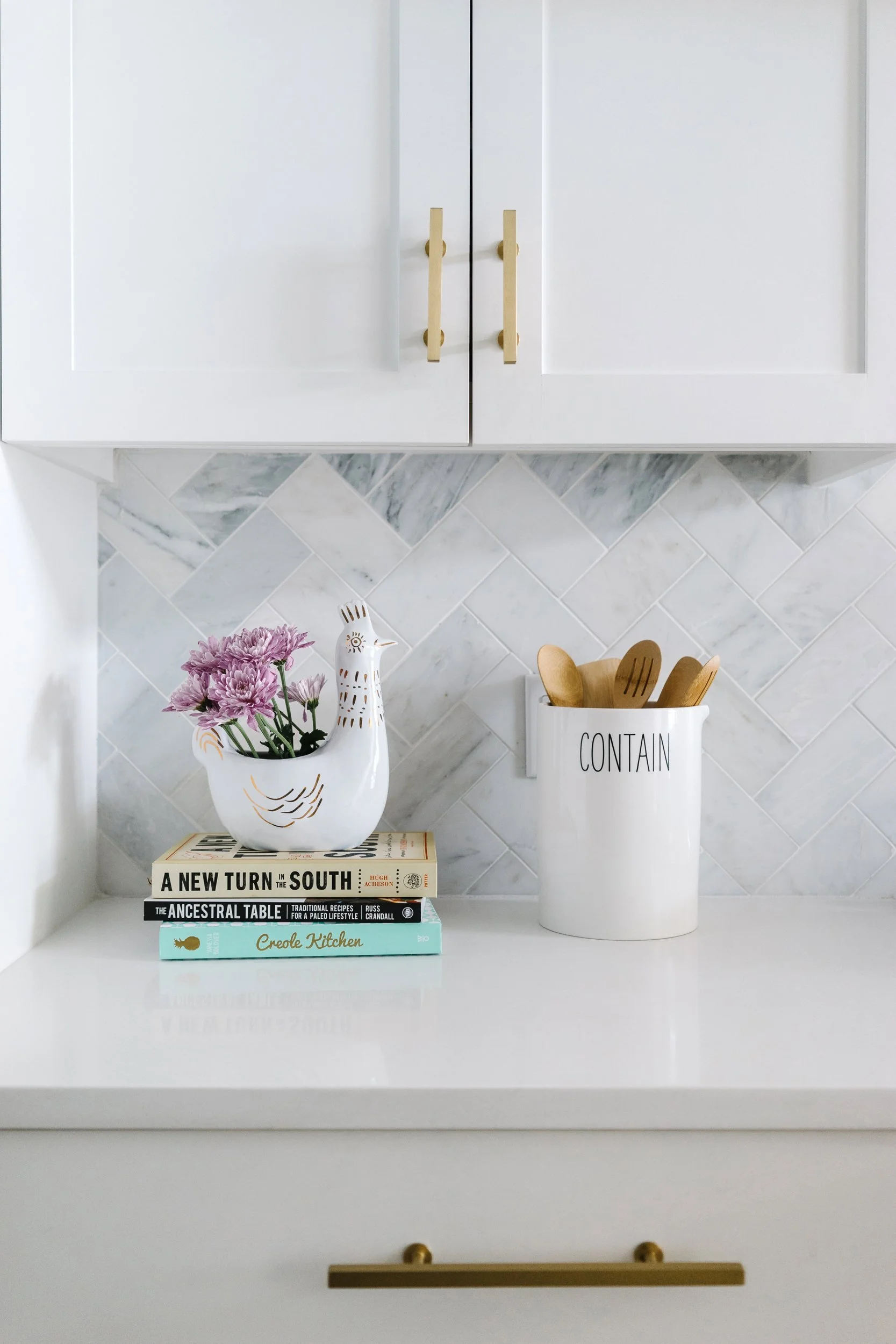
Marble: Softness, Depth, and an Honest Patina
Marble remains compelling because it has visual depth that many manufactured surfaces cannot reproduce. Its veining is often fluid rather than graphic, and a honed finish can give a contemporary kitchen a calm, almost velvety quality. White marbles, green stones, and quieter gray varieties can all work beautifully with minimal cabinetry, provided the slab has been selected for its particular movement rather than its name alone.
Its trade-off is real. Marble is comparatively soft and reactive to acids, so lemon juice, vinegar, wine, and tomato can etch the surface. Etching is not always a stain; it is a change in sheen that becomes more visible on polished material. Honed marble disguises this better and develops a gentler patina over time.
For clients who prefer materials that record use rather than resist it entirely, marble can be a very considered choice. It is less suited to a household seeking a pristine, uniform surface indefinitely, especially around a hardworking kitchen island.
Granite: Durable, Varied, and More Selective Than It Once Was
Granite has long been valued for durability, heat resistance, and relative ease of care. It is a sensible option for active kitchens, particularly when the priority is a natural material that can tolerate significant use. Yet granite's design reputation has suffered from years of highly patterned, glossy installations rather than from any inherent limitation of the stone itself.
The most successful contemporary applications tend toward quieter selections: black, charcoal, deep green, soft gray, or lightly mottled slabs with restrained movement. A leathered or honed finish can further reduce visual noise and give granite a more architectural presence. It may be a particularly strong answer where dark countertops are desired without the delicacy of black marble.
As with all natural stone, sealing requirements vary by quarry and finish. A fabricator should test the specific slab rather than relying on a broad material category.
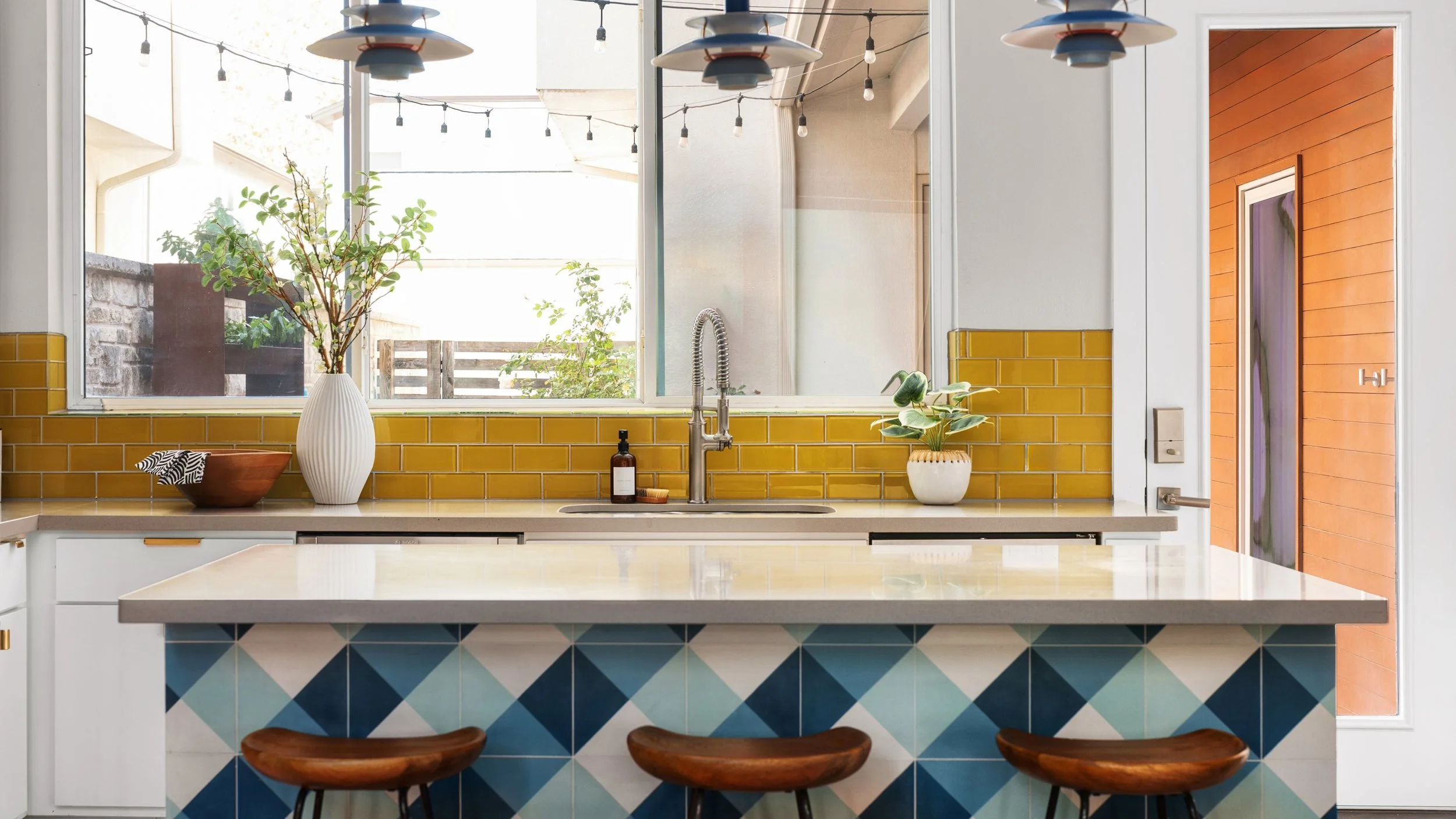
Quartzite: Drama With Better Kitchen Resilience
Quartzite is frequently chosen by clients drawn to marble's movement but needing greater hardness and acid resistance. True quartzite is generally denser and more durable than marble, making it well suited to kitchen counters that see regular cooking, serving, and family use. It can offer a broad range of looks, from pale, clouded fields to more directional veining.
The important qualifier is verification. Some stones sold under the quartzite label are softer dolomitic marbles or other materials with different performance characteristics. Ask the fabricator to identify the exact stone and discuss its porosity, reaction to acids, and recommended maintenance. A confident purchase should be based on the behavior of the chosen slab, not only its trade name.
Quartzite can be visually active. In a minimal kitchen, consider whether its movement will be carried through a full-height backsplash or held only at the counter. Continuing a strongly veined stone up the wall can feel intentional and monolithic, but it can also dominate a smaller room. A simple painted or plaster wall may create the better balance.
Soapstone and Limestone: Quieter Materials, Distinct Requirements
Soapstone is naturally dark, tactile, and often beautifully matte. It develops character through use, with small scratches and shifts in tone becoming part of its finish. Its understated movement works well in contemporary and Scandinavian-influenced spaces, especially with pale woods, brushed metal, and warm white walls. It is nonporous and highly resistant to acids, though it is softer than granite or quartzite and can chip at exposed edges.
Limestone offers a different kind of restraint. Its soft, mineral appearance can create an exceptional relationship with plaster, oak, and aged brass, particularly in baths, bars, or lower-use kitchens. However, it is porous and acid-sensitive. A honed limestone counter asks for care, and it is best specified for clients comfortable with variation and patina. In a busy family kitchen, it may be better reserved for a baking station, a bar, or a vanity where its quieter beauty can be appreciated without constant anxiety.
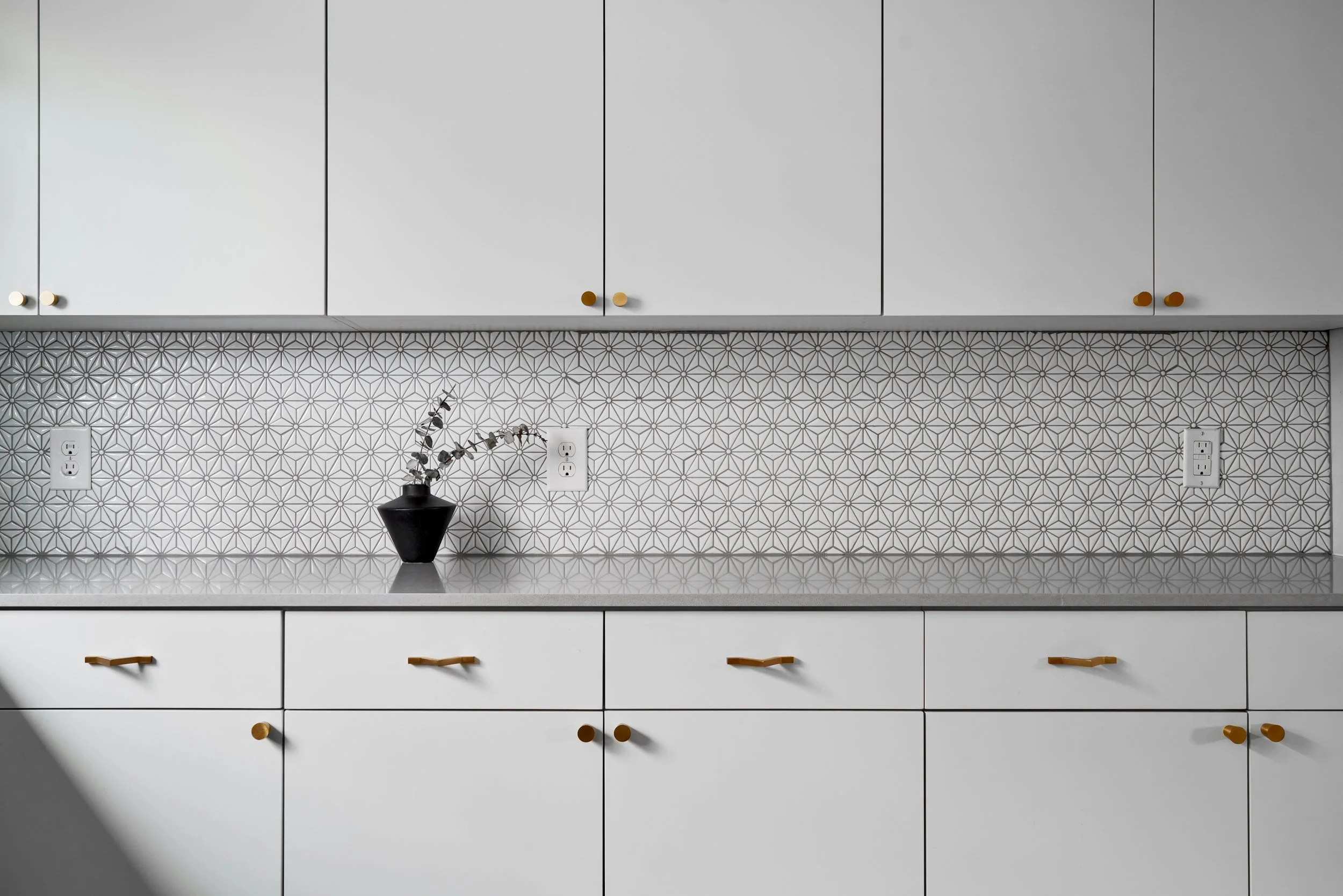
Natural Stone Versus Engineered Quartz
A stone countertop comparison often includes engineered quartz, even though it is not natural stone in the same sense as marble or granite. Quartz surfaces offer predictable color, low porosity, and straightforward maintenance. They can be a practical choice for rental properties, secondary kitchens, or projects where visual consistency across large areas matters.
Their limitation is often visual rather than functional. Some patterns can appear repetitive at close range, and many lack the depth, variation, and softened edges of a natural slab. Heat resistance also varies, so hot cookware should not be placed directly on the surface. For an interior centered on natural materials and lasting visual nuance, natural stone frequently brings more character. For a highly controlled palette with minimal upkeep, quartz may be the more appropriate choice.
The Details That Change Performance
Material selection is only part of the specification. Finish, edge profile, seams, and fabrication determine how a countertop looks and wears. Honed finishes are generally more forgiving than polished finishes on marble and limestone, while leathered granite can add texture without excessive shine.
A simple eased edge usually supports a modern interior and is easier to repair than a highly detailed profile. Mitered edges can create a substantial, monolithic appearance, but they require excellent fabrication and careful seam placement. At an island, consider where seams will fall relative to seating, cooktops, and the primary sightline from the adjacent room.
Backsplash height matters, too. A short stone return can establish a crisp datum line. A full-height slab can make the cabinetry feel integrated and architectural. Neither approach is automatically better. The decision depends on the stone's scale, the room's natural light, and how much visual quiet the overall composition needs.
Choose for the Life You Intend to Live
The best stone does not need to perform every role perfectly. A polished Calacatta marble may be exactly right for a formal powder room. A honed quartzite may make more sense at the island where breakfast, homework, and dinner preparation overlap. Soapstone can bring depth to a bar, while a restrained granite may deliver the durability a frequently used kitchen requires.
Ask to see the full slab, review care expectations without euphemism, and decide whether the material's aging process aligns with your household. A countertop becomes more convincing over time when it reflects how the home is actually used, rather than asking its occupants to preserve a showroom condition.
Planning a renovation or full home design in the San Francisco Bay Area or Austin? Our Bay Area interior design team works across San Francisco, Marin, the Peninsula and the East Bay, and our Austin studio serves Central Texas. Book a discovery call to talk through your project.