

A bedroom is often the most private room in a home, yet it is where design decisions become most personal. The strongest modern bedroom interior design ideas do not depend on a recognizable style alone. They create a measured relationship among architecture, light, storage, materials, and the rituals that begin and end each day.
For a primary suite in a Westlake residence, a compact San Francisco condominium, or a carefully considered guest room, the goal is similar: reduce visual noise without making the room feel spare. Modern bedrooms succeed when restraint is paired with tactile comfort and a plan that accounts for how the room is actually used.
Start With the Architecture, Not the Furniture
A bed is the visual center of a bedroom, but it should not be the first decision. Begin with the room's fixed conditions: window placement, ceiling height, wall proportions, existing millwork, circulation paths, and the direction of natural light. These elements establish the logic that furniture, lighting, and finishes should follow.
The best wall for the bed is not always the largest one. A wall with adequate width, a clear view from the doorway, and enough space for bedside tables can create a more settled composition than a dramatic but impractical placement. In an urban bedroom, this may mean choosing a low platform bed that preserves sightlines. In a larger home, it may mean using a deep upholstered headboard or wood-paneled wall to give a broad room necessary scale.
Circulation matters as much as symmetry. Aim for clear routes around the bed, to the closet, and toward the bath. A room can look composed in a rendering yet feel cramped if a drawer interrupts the passage to a window or a nightstand crowds one side of the bed. Modern design is at its best when the room feels obvious to use.
Build a Quiet Material Palette
Minimal does not have to mean white walls, pale oak, and nothing else. A restrained bedroom generally needs a limited palette, but the materials within it should offer variation. Plaster or softly matte paint can sit alongside walnut, white oak, wool, linen, leather, or a subtly veined stone. The distinction comes from texture, undertone, and finish rather than from a large number of colors.
Choose one material to anchor the room. In a contemporary residence, that might be rift-cut oak millwork with a warm gray wall color and linen upholstery. In an atomic ranch renovation, it could be walnut against a chalky mineral paint, with a woven wool rug underfoot. The materials should relate to the architecture of the house rather than arriving as an isolated decorating scheme.
Undertones deserve close attention. Cool gray paint can make honey-toned oak appear orange, while a pink-beige fabric may feel unexpectedly separate from a clean limestone floor. Gather finish samples in the room and review them in morning, afternoon, and evening light. This is especially useful in coastal Northern California, where cool daylight can alter neutral colors, and in Austin, where direct sun can make warm finishes read more intensely.
A more dramatic palette can work, but it needs discipline. Deep olive, oxblood, charcoal, or midnight blue may create a compelling sense of enclosure when used across walls, drapery, and upholstery. The trade-off is that dark rooms reveal poor lighting more readily. If the envelope becomes saturated, build in layered, dimmable illumination from the outset.
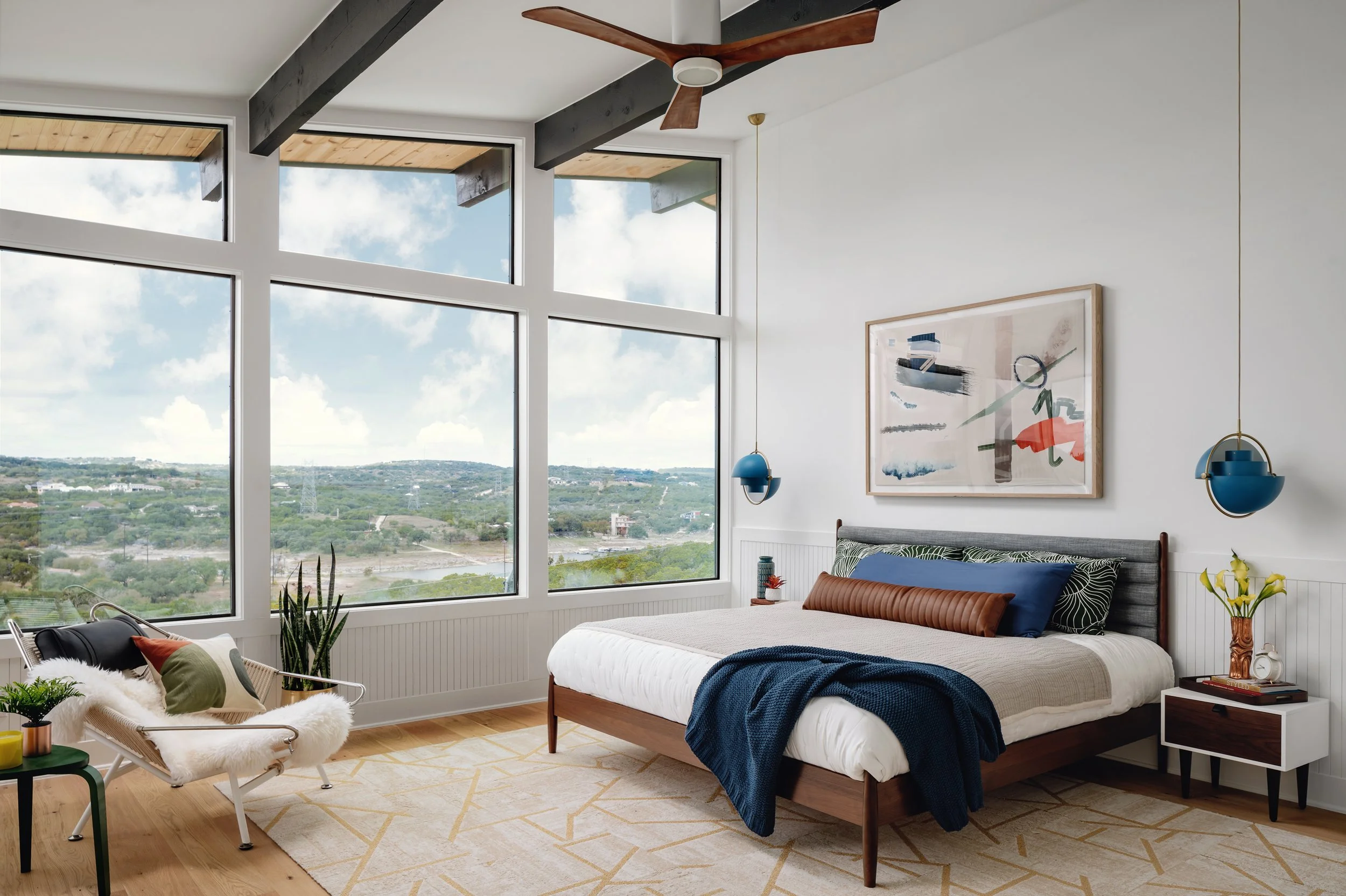
Modern Bedroom Interior Design Ideas for the Bed Wall
The bed wall is an opportunity to make the room feel intentional without turning it into a feature wall for its own sake. A simple, well-proportioned upholstered headboard can soften a room with hard architectural lines. Full-height wood paneling adds warmth and can conceal integrated reading lights, switches, or shallow storage. A painted wall in a considered tone is often enough when the architecture already has presence.
What matters is proportion. A headboard that is too narrow can make even a generous bed feel undersized, while a tall, heavily detailed treatment can overpower a low-ceilinged room. Let the composition respond to the wall and ceiling, not just the mattress width.
Bedside tables should be chosen as part of this elevation. Matching tables bring clarity, but strict symmetry is not mandatory. A built-in ledge on one side and a freestanding table on the other can be appropriate where a window, door, or closet interrupts the plan. The common thread should be visual weight and usable surface area, not identical forms.
Treat Lighting as a System
Bedrooms are frequently overreliant on one central fixture. A decorative pendant or flush mount may establish atmosphere, but it cannot perform every task. A well-composed lighting plan has ambient light for general use, focused light for reading and dressing, and low-level light for moving through the room at night.
Bedside sconces are useful when nightstands need to remain clear or when a room is compact. They should be located for the person using the bed, not merely centered at a standard height. Adjustable fixtures offer flexibility, while fixed, shaded sconces create a calmer architectural presence. If pendants are used beside the bed, their drop and diameter must be carefully coordinated with the headboard and bedside surface.
Consider lighting controls early. Dimmers, separate bedside switching, and a low-level path light can make a significant difference in daily use. Decorative bulbs, overly exposed sources, and bright 3000K-plus lighting tend to undermine the quiet quality a bedroom needs. Warmer light, typically around 2700K, generally makes natural materials and skin tones feel more relaxed.
Integrate Storage Before Adding Decor
Clutter is rarely a styling problem. It is usually a storage problem. The most refined modern bedrooms make space for chargers, books, extra bedding, luggage, laundry, and the inevitable personal objects that do not belong on display.
Custom millwork is not necessary in every room, but it can solve multiple issues at once. A low credenza can ground a long wall while holding linens. A window seat can add a place to sit and conceal storage below. In a smaller footprint, wardrobes that extend to the ceiling make better use of volume than a collection of low, freestanding pieces.
Keep open shelving limited in the bedroom. It photographs well when sparsely styled, but it requires ongoing editing and quickly becomes visually busy. Closed storage supports the sense of calm that clients often want from a private room. If display space is desired, one recessed niche or a carefully chosen ledge is usually sufficient.
Add Softness With Intention
A modern bedroom needs softness, but not every surface needs to be plush. The contrast between a tailored bed, a substantial rug, and clean-lined casework often creates more comfort than layers of small accessories.
Start with the rug. It should extend far enough beyond the bed to feel generous underfoot, especially at the sides and foot. A small rug placed only beneath the lower third of the bed can make an otherwise well-furnished room feel provisional. Wool, wool-silk blends, and low-pile textured rugs tend to provide depth without competing with the rest of the palette.
Window treatments are equally consequential. Linen drapery filters daylight and introduces movement; blackout-lined panels or integrated shades offer the darkness required for sleep. In many projects, the most successful answer is both: a functional shade close to the glass and fuller drapery at the perimeter. The layered approach costs more than a single treatment, but it offers better light control and a more complete architectural finish.
Art should be selected for scale and mood rather than simply to fill a blank wall. One large work above a bench or opposite the bed can be more convincing than a grid of smaller pieces. Leave some walls quiet. Visual restraint gives the art, materials, and natural light room to register.
Know Where Restraint Should Give Way
There is no universal formula for a modern bedroom. A spare palette may suit a quiet primary suite but feel impersonal in a teenager's room or a guest room intended to feel generous and memorable. A sculptural pendant may be right for a high-ceilinged space but become a nuisance in a lower room with ceiling fan requirements.
The useful question is not whether an element is minimal enough. It is whether it contributes to rest, function, and the architectural character of the home. Breathe Design Studio approaches bedrooms as part of a larger interior sequence, where the materials at the threshold, the view from the hall, and the relationship to the bath all shape the experience.
A room that supports sleep, dressing, reading, and a quiet moment before the day begins does not need many gestures. It needs the right ones, resolved with enough care that living there feels effortless.