
A pale oak floor, a well-proportioned sofa, a lamp that gives off a warm, low glow: the appeal can seem immediate. But why is Scandinavian design so popular across homes far beyond Copenhagen, Stockholm, and Helsinki? Its lasting relevance comes from more than a recognizable look. It offers a disciplined way of making rooms feel lighter, calmer, and more useful without making them feel empty.
For homeowners undertaking a substantial renovation or furnishing a new residence, that distinction matters. Scandinavian design is not simply a formula of white walls and blond wood. At its best, it is a framework for resolving space, light, material, and daily life with unusual clarity.
The Scandinavian Design Appeal Begins With Real Conditions
The movement developed in Northern Europe through a particular set of social, climatic, and cultural conditions. Long winters created a heightened sensitivity to daylight and artificial light. Compact urban homes demanded efficient planning. A strong tradition of craft encouraged attention to furniture, joinery, textiles, and objects made for repeated use.
The resulting interiors favored visual openness, natural materials, and forms that were direct rather than ornamental. These were not abstract aesthetic choices. They were practical responses to how people lived. A room needed to hold up through dark months, active family life, and years of use.
That origin still gives the style credibility. Rather than relying on novelty, Scandinavian design makes a persuasive case for fewer, better decisions. It asks whether a chair is comfortable as well as sculptural, whether storage supports calm, and whether a material will gain character over time.
Why Is Scandinavian Design So Popular in American Homes?
American interest in Scandinavian interiors has endured because the principles translate well, even when the architecture does not. In a San Francisco condominium, the approach can bring order to a compact footprint and frame expansive views without competing with them. In an Austin renovation, it can temper strong sun, connect interiors to outdoor space, and give an open plan a greater sense of repose.
Its popularity also reflects a broader shift in how clients define luxury. Excess is no longer the only visual signal of investment. Many design-conscious homeowners now value precise detailing, natural stone, expressive wood grain, tailored upholstery, and rooms that feel composed from every vantage point. Scandinavian design supports that quieter standard of quality.
The style is especially effective in homes with strong architectural bones. A midcentury ranch, a contemporary hillside residence, or a carefully renovated older home can all accommodate its emphasis on proportion and material honesty. It does not require every room to announce itself. Instead, it allows architecture, art, and the daily rituals of a household to register more clearly.
It makes light part of the architecture
Light is one of Scandinavian design's most influential ideas. Interiors are often arranged to extend available daylight, with restrained window treatments, reflective yet matte surfaces, and furnishings placed to preserve sightlines. The goal is not brightness at any cost. It is a more measured relationship between light and shadow.
This approach remains valuable in very different American settings. A fog-softened morning in the Bay Area calls for layered illumination and warm materials. Intense Texas afternoon sun may require filtered glazing, deeper wall tones, and carefully selected shades. In both cases, lighting should be planned as part of the interior architecture, not added after the furniture arrives.
A successful scheme typically combines ambient light, focused task lighting, and decorative fixtures that create atmosphere. Scandinavian lighting often excels because it treats fixtures as useful objects with sculptural presence, rather than as isolated decoration.
It values materials that improve with use
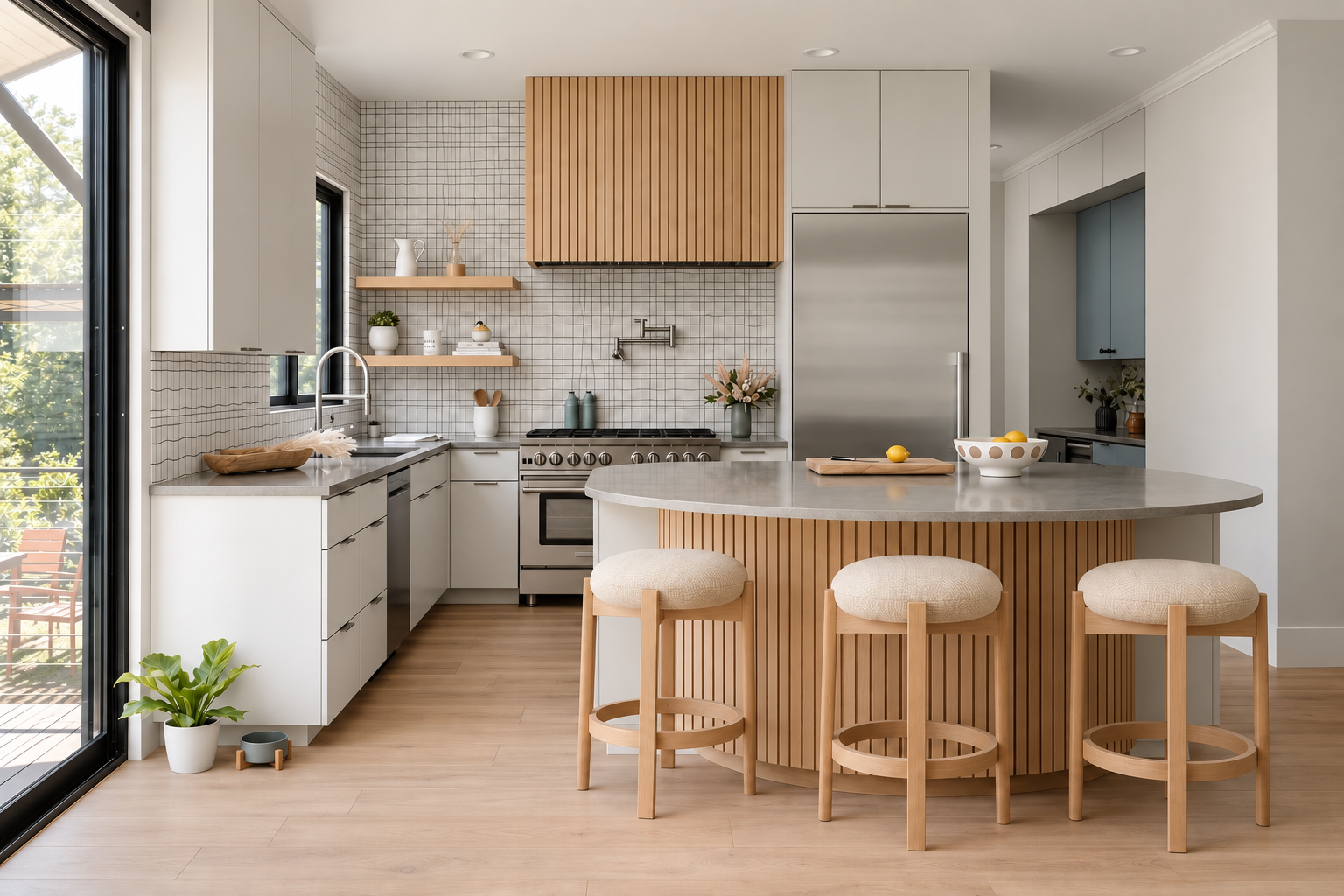
Oak, ash, wool, linen, leather, stone, and ceramic are central to the Scandinavian vocabulary because they offer texture without visual noise. They also age with dignity. A wood table can collect small marks. Linen can soften. Patinated metal can become more interesting rather than less.
That preference is well suited to clients who want a finished home to remain livable. Highly polished surfaces and delicate decorative layers can look impressive in photographs, but they may ask too much of a household. Materials with depth and resilience create an interior that can absorb real life while retaining its composure.
This does not mean every surface should be rustic or unfinished. A refined Scandinavian-influenced interior often depends on contrast: honed stone beside finely detailed millwork, a tailored wool sofa against smooth plaster, or a quiet room anchored by a single darker timber element. Restraint works best when it is supported by tactile variation.

The Power of Visual Restraint
The recognizable calm of Scandinavian design comes partly from editing. Rooms tend to have a clear hierarchy. Major furniture establishes the composition, circulation remains legible, and accessories are selective rather than abundant. There is room for the eye to rest.
For clients with art collections, books, family objects, or inherited pieces, this can be particularly useful. A restrained architectural backdrop allows personal possessions to feel intentional instead of crowded. It also makes future changes easier. A well-designed foundation can accommodate new work, a different rug, or evolving family needs without requiring an entirely new visual language.
Minimalism, however, is not the same as absence. A room with too little contrast, insufficient softness, or no evidence of the people who live there can feel generic. The most convincing Scandinavian spaces avoid sterility through warm undertones, natural texture, meaningful objects, and furniture with generous proportions.
Function Is Not an Afterthought
Scandinavian design is popular because it treats functionality as an aesthetic discipline. Storage is integrated early. Kitchens prioritize efficient movement. Dining areas are designed for conversation and daily meals, not only formal entertaining. A bench, built-in, or reading chair earns its place through actual use.
This is where the style has relevance beyond appearance. During a major renovation, the decisions that most affect daily life are often invisible at first: outlet placement, kitchen circulation, cabinet depth, concealed storage, lighting controls, and transitions between public and private areas. A calm room is difficult to achieve if it cannot contain the practical requirements of the people using it.
Thoughtful planning also makes smaller spaces feel more generous. A custom millwork wall can hold media, books, office supplies, and concealed clutter while preserving a clear living area. In an ADU or urban residence, a dining table may need to work as a workspace. The design should acknowledge that reality with durable finishes, comfortable seating, and lighting that can change character throughout the day.
The Trade-Offs Behind the Look
The widespread popularity of Scandinavian design has produced a simplified version of it: pale wood, white paint, black accents, and generic furniture. That shorthand can feel flat, particularly in homes with a strong regional identity or historic character.
A literal interpretation may also be poorly suited to a particular climate. Very pale interiors can feel glaring in intense sun. Cool grays that read quietly in northern light may feel remote elsewhere. And an all-neutral palette can fail to give a home the contrast and depth it needs.
The better approach is to use the principles, not copy the image. In California, that might mean pairing light oak with warmer plaster, bronzed metal, and locally resonant stone. In Central Texas, it could mean using deeper wood tones, woven textiles, and a more protective approach to daylight. The design should respond to the building, the landscape, and the way the household entertains, works, and rests.
How to Use Scandinavian Principles Without Creating a Theme
Begin with the architectural envelope. Before selecting furniture, consider how rooms connect, where natural light enters, and what views or existing materials deserve emphasis. A successful interior usually has a limited material palette carried consistently from room to room, with enough variation to avoid repetition.
Next, invest in the elements that meet the body every day: flooring, cabinetry, hardware, upholstery, dining chairs, and lighting. These are the components where material quality and proportion are felt most directly. Decorative accessories can arrive gradually, once the room's larger composition is settled.
Finally, allow the home to be specific. A Scandinavian-influenced interior can include a vintage Italian lamp, a contemporary American painting, a handwoven textile, or a family heirloom. The point is not stylistic purity. It is to give each piece enough space and context to matter.
The enduring lesson is simple: design feels generous when it is carefully edited, materially grounded, and shaped around real life. That is a useful standard for any home, regardless of geography or label.
To see these ideas at work in a finished home, tour our Scandinavian modern farmhouse project or browse the full residential portfolio. If you are planning a renovation or a new home, contact Breathe Design Studio to start the conversation.